SECTION 4: Seasoning of timber
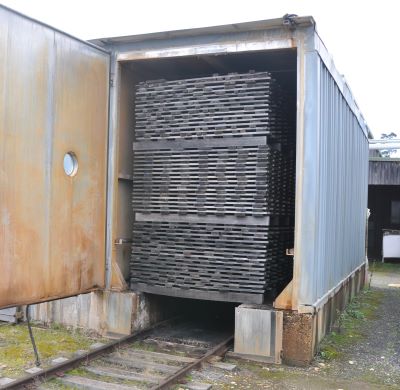
The wood fibres in a living tree contain water in the cell cavities and cell walls. When the logs are harvested and broken down in a sawmill, the timber is still ‘green’, or wet with this sap and moisture. The process of drying out the re-sawn timber is called seasoning.
Traditionally, building timbers were generally used in their unseasoned state, particularly in the days when house frames were built ‘stick-by-stick’ on-site. Even cypress pine floor boards were typically green, because cypress has a very low shrinkage rate when it dries, and the flooring was often covered with carpet or linoleum anyway.
However, most species of timber perform better when they're dry, particularly the plantation pines and high grade hardwoods. So it's common practice these days to use kiln dried timber in most building applications.
The advantages of using seasoned timber in a building or manufactured product include:
-
increased strength, since the wood cells have shrunk and become stiffer, and the lignin has hardened
-
decreased weight, because the moisture content is less
-
improved durability, because there is more resistance to organisms that draw food and moisture from the timber, such as decay fungi
-
more reliable gluing, since some adhesives require dry material to form a good bond
-
improved stability, which means the timber will stay straighter in storage and will need less restraint in the finished structure
-
better quality joinery work, without the risk of gaps opening up due to shrinkage.
In this section, we’ll discuss the process of seasoning and the various effects it has on the properties of wood.
Contents
There are three lessons in this section, covering the main aspects of timber seasoning.